Buy na6.eu ?
We are moving the project
na6.eu .
Are you interested in purchasing the domain
na6.eu ?
domain@kv-gmbh.de · 0541-91531010
Buy na6.eu ?
What is an isometry with non-orthogonal corners?
An isometry with non-orthogonal corners is a transformation that preserves distances and angles, but the corners of the shape are not at right angles to each other. This means that the shape is still congruent to its original form after the transformation, but the angles at the corners are not 90 degrees. Isometries with non-orthogonal corners can include rotations, reflections, translations, and glide reflections. These transformations are important in geometry and can be used to study the properties of shapes and figures. **
What is an isometry with non-orthogonal vertices?
An isometry with non-orthogonal vertices is a transformation that preserves distances and angles between points, but the vertices are not at right angles to each other. This means that the shape is still congruent to its original form, but the angles between the edges are not necessarily 90 degrees. Isometries with non-orthogonal vertices can include translations, rotations, reflections, and glide reflections. These transformations are important in geometry and can help us understand the properties of shapes in different orientations. **

Similar search terms for Non-orthogonal
Top-Angebote
Products related to Non-orthogonal:
-
Inspire Daily Merch Durable Reusable Pet Hair Removal Dryer Balls Non Electric Lint Catcher For Laundry Washing Accessories Durable Reusable Pet Hair Removal Dryer Balls Non Electric Lint Catcher For Laundry Washing AccessoriesEfficient Pet Hair Removal for Laundry Say goodbye to pet hair stuck in your laundry! The 6pcs Reusable Pet Hair Removal Laundry Balls are designed to effortlessly capture and remove pet hair from your clothes during laundry cycles. Whether you're...29,97 $*Shipping: 0,00 $Secure redirect to the provider
-
Daisy Tech Bennett Designs Blossom Chinoiserie Premium Matte Non-Woven Peel and Stick WallpaperWhether styled in a bright living area or cozy reading nook, this Blossom Chinoiserie Premium Matte Non-Woven peel and stick wallpaper pattern by Daisy Bennett Designs feels effortless and endlessly inviting.49,99 $*Shipping: 0,00 $Secure redirect to the provider
-
Uplifted Finds Aero Grip Kinetic Four Finger Workout Gloves Premium Non Slip Fitness And Training Gear black mCommand ultimate lifting confidence with the AeroGrip Kinetic FourFinger System, a highperformance athletic solution specifically engineered to act as a comprehensive tool for elite organization and superior technical ergonomics. Built with a robust...84,97 $*Shipping: 0,00 $Secure redirect to the provider



-
What is an orthogonal vector?
An orthogonal vector is a vector that is perpendicular to another vector. In other words, two vectors are orthogonal if their dot product is zero. Geometrically, this means that the two vectors form a 90-degree angle with each other. Orthogonal vectors are important in many areas of mathematics and physics, including linear algebra and vector calculus. **
-
Are linearly independent vectors always orthogonal?
No, linearly independent vectors are not always orthogonal. Linear independence means that no vector in the set can be written as a linear combination of the others, while orthogonality means that the vectors are perpendicular to each other. It is possible for linearly independent vectors to be orthogonal, but it is not a guarantee. For example, in three-dimensional space, the vectors (1, 0, 0), (0, 1, 0), and (0, 0, 1) are linearly independent and orthogonal, but the vectors (1, 1, 0) and (0, 1, 1) are linearly independent but not orthogonal. **
-
When are planes and lines orthogonal?
Planes and lines are orthogonal when the line is perpendicular to the plane. This means that the line forms a 90-degree angle with the plane, creating a right angle. In other words, the direction of the line is perpendicular to the direction of the plane. This relationship is important in geometry and engineering, as it affects the intersection and orientation of different geometric elements. **
-
What does the term orthogonal mean?
The term orthogonal refers to two things being perpendicular or at right angles to each other. In mathematics, it often refers to vectors or matrices that are perpendicular to each other. In a broader sense, it can also refer to any two things that are independent or unrelated to each other. **


What are non-invasive medical devices?
Non-invasive medical devices are tools or equipment that do not penetrate the body or break the skin during their use. These devices are designed to diagnose, monitor, or treat medical conditions without the need for surgery or other invasive procedures. Examples of non-invasive medical devices include blood pressure monitors, thermometers, and ultrasound machines. These devices are often preferred by patients and healthcare providers due to their lower risk of complications and ease of use. **
How do I calculate the orthogonal complement?
To calculate the orthogonal complement of a subspace, you first need to find a basis for the subspace. Then, you can use the Gram-Schmidt process to find an orthogonal basis for the subspace. Once you have the orthogonal basis, you can take the orthogonal complement by finding the orthogonal complement of each basis vector and then taking the span of those vectors. This will give you the orthogonal complement of the original subspace. **
Top-Angebote
Products related to Non-orthogonal:
-
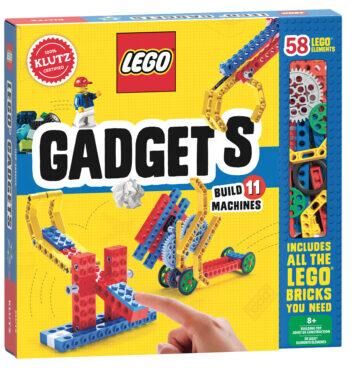
Klutz: LEGO GadgetsThis activity kit will have you building 11 machines including a gravity powered car and a wacky boxing robot. The fun doesn't stop once you've completed all of the projects in the book - open-ended prompts will inspire you to continue experimenting...24,99 $*Shipping: 0,00 $Secure redirect to the provider
-
Inspire Daily Merch Durable Reusable Pet Hair Removal Dryer Balls Non Electric Lint Catcher For Laundry Washing Accessories Durable Reusable Pet Hair Removal Dryer Balls Non Electric Lint Catcher For Laundry Washing AccessoriesEfficient Pet Hair Removal for Laundry Say goodbye to pet hair stuck in your laundry! The 6pcs Reusable Pet Hair Removal Laundry Balls are designed to effortlessly capture and remove pet hair from your clothes during laundry cycles. Whether you're...29,97 $*Shipping: 0,00 $Secure redirect to the provider
-
What is an isometry with non-orthogonal corners?
An isometry with non-orthogonal corners is a transformation that preserves distances and angles, but the corners of the shape are not at right angles to each other. This means that the shape is still congruent to its original form after the transformation, but the angles at the corners are not 90 degrees. Isometries with non-orthogonal corners can include rotations, reflections, translations, and glide reflections. These transformations are important in geometry and can be used to study the properties of shapes and figures. **
-
What is an isometry with non-orthogonal vertices?
An isometry with non-orthogonal vertices is a transformation that preserves distances and angles between points, but the vertices are not at right angles to each other. This means that the shape is still congruent to its original form, but the angles between the edges are not necessarily 90 degrees. Isometries with non-orthogonal vertices can include translations, rotations, reflections, and glide reflections. These transformations are important in geometry and can help us understand the properties of shapes in different orientations. **
-
What is an orthogonal vector?
An orthogonal vector is a vector that is perpendicular to another vector. In other words, two vectors are orthogonal if their dot product is zero. Geometrically, this means that the two vectors form a 90-degree angle with each other. Orthogonal vectors are important in many areas of mathematics and physics, including linear algebra and vector calculus. **
-
Are linearly independent vectors always orthogonal?
No, linearly independent vectors are not always orthogonal. Linear independence means that no vector in the set can be written as a linear combination of the others, while orthogonality means that the vectors are perpendicular to each other. It is possible for linearly independent vectors to be orthogonal, but it is not a guarantee. For example, in three-dimensional space, the vectors (1, 0, 0), (0, 1, 0), and (0, 0, 1) are linearly independent and orthogonal, but the vectors (1, 1, 0) and (0, 1, 1) are linearly independent but not orthogonal. **
Similar search terms for Non-orthogonal
-
Daisy Tech Bennett Designs Blossom Chinoiserie Premium Matte Non-Woven Peel and Stick WallpaperWhether styled in a bright living area or cozy reading nook, this Blossom Chinoiserie Premium Matte Non-Woven peel and stick wallpaper pattern by Daisy Bennett Designs feels effortless and endlessly inviting.49,99 $*Shipping: 0,00 $Secure redirect to the provider
-
Uplifted Finds Aero Grip Kinetic Four Finger Workout Gloves Premium Non Slip Fitness And Training Gear black mCommand ultimate lifting confidence with the AeroGrip Kinetic FourFinger System, a highperformance athletic solution specifically engineered to act as a comprehensive tool for elite organization and superior technical ergonomics. Built with a robust...84,97 $*Shipping: 0,00 $Secure redirect to the provider
-
Daisy Tech Bennett Designs Blossom Chinoiserie Premium Matte Non-Woven Peel and Stick WallpaperWhether styled in a bright living area or cozy reading nook, this Blossom Chinoiserie Premium Matte Non-Woven peel and stick wallpaper pattern by Daisy Bennett Designs feels effortless and endlessly inviting.49,99 $*Shipping: 0,00 $Secure redirect to the provider
-
When are planes and lines orthogonal?
Planes and lines are orthogonal when the line is perpendicular to the plane. This means that the line forms a 90-degree angle with the plane, creating a right angle. In other words, the direction of the line is perpendicular to the direction of the plane. This relationship is important in geometry and engineering, as it affects the intersection and orientation of different geometric elements. **
-
What does the term orthogonal mean?
The term orthogonal refers to two things being perpendicular or at right angles to each other. In mathematics, it often refers to vectors or matrices that are perpendicular to each other. In a broader sense, it can also refer to any two things that are independent or unrelated to each other. **
-
What are non-invasive medical devices?
Non-invasive medical devices are tools or equipment that do not penetrate the body or break the skin during their use. These devices are designed to diagnose, monitor, or treat medical conditions without the need for surgery or other invasive procedures. Examples of non-invasive medical devices include blood pressure monitors, thermometers, and ultrasound machines. These devices are often preferred by patients and healthcare providers due to their lower risk of complications and ease of use. **
-
How do I calculate the orthogonal complement?
To calculate the orthogonal complement of a subspace, you first need to find a basis for the subspace. Then, you can use the Gram-Schmidt process to find an orthogonal basis for the subspace. Once you have the orthogonal basis, you can take the orthogonal complement by finding the orthogonal complement of each basis vector and then taking the span of those vectors. This will give you the orthogonal complement of the original subspace. **
* All prices are inclusive of VAT and, if applicable, plus shipping costs. The offer information is based on the details provided by the respective shop and is updated through automated processes. Real-time updates do not occur, so deviations can occur in individual cases. ** Note: Parts of this content were created by AI.